24th- 25th March 2025
Stockholm, Sweden
Stockholm Center on Global Governance (SCGG) Workshop
Aysem Mert presented the team’s co-authored paper titled Political Fantasy in Global Environmental Politics at the Stockholm Center on Global Governance (SCGG) workshop.

23rd January 2025
Stockholm, Sweden
EPPLE (Environmental Policy, Politics, and Learning) Winter Workshop
Aysem Mert co-organised the EPPLE (Environmental Policy, Politics, and Learning) Winter Workshop and presented the team’s co-authored paper: Explaining Inertia in Global Environmental Politics: Political fantasy, desire, affect, and the unconscious
Julia Feine also presented “Krisen klarar Sverige“: communal experiences with the 2018 forest fires in the same panel.
January 2025
Utrecht University, ReCNTR at Leiden University, and Lund University:
Unlocking the Imagination: Art-Science for Radical Transformation Workshop
Aysem Mert attended the workshop Unlocking the Imagination: Art-Science for Radical Transformation Sponsored by Pathways to Sustainability.
They contributed to the publication of the workshop zine titled TWIG:
The What If Garden – A Field Guide to Radical Imagination by Lisette van Beek, Ekaterina Volkova, Josephine Chambers, Johannes Stripple, Mark Westmoreland.
October 2024
Cali, Colombia
The Global Biodiversity Summit in Colombia ends in disappointment
In October 2024 project member Jelle Behagel partook in the Conference of the Parties to the UN Convention on Biological Diversity 16th meeting in Cali, Colombia. See his impressions and read his reflections here!
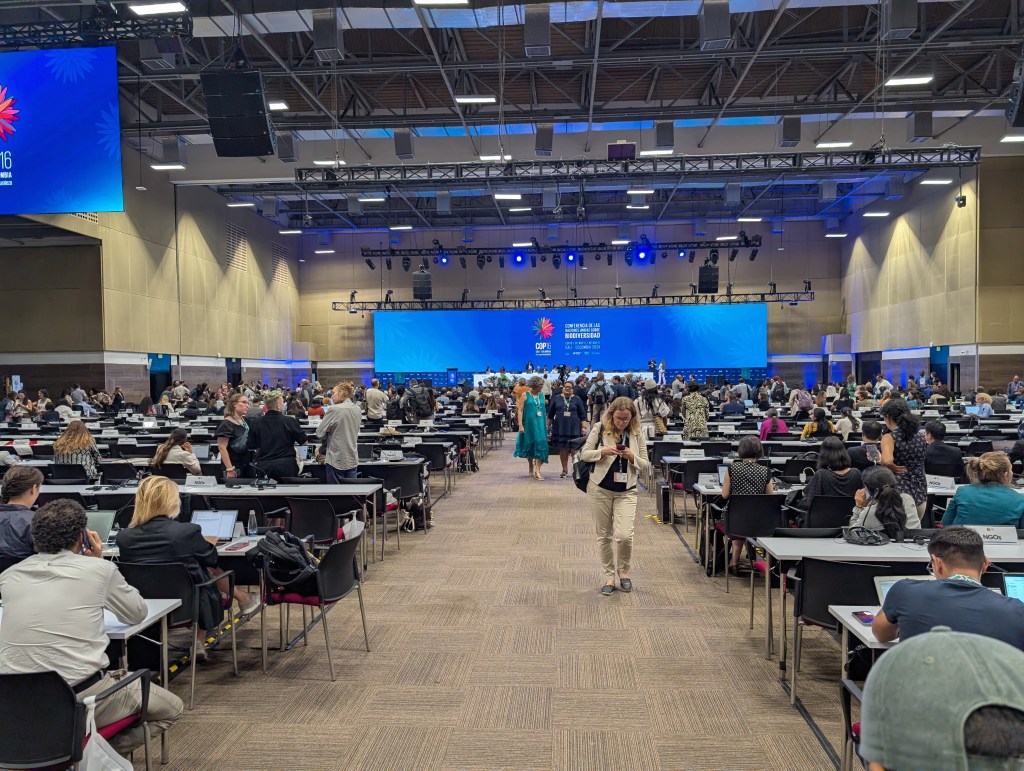
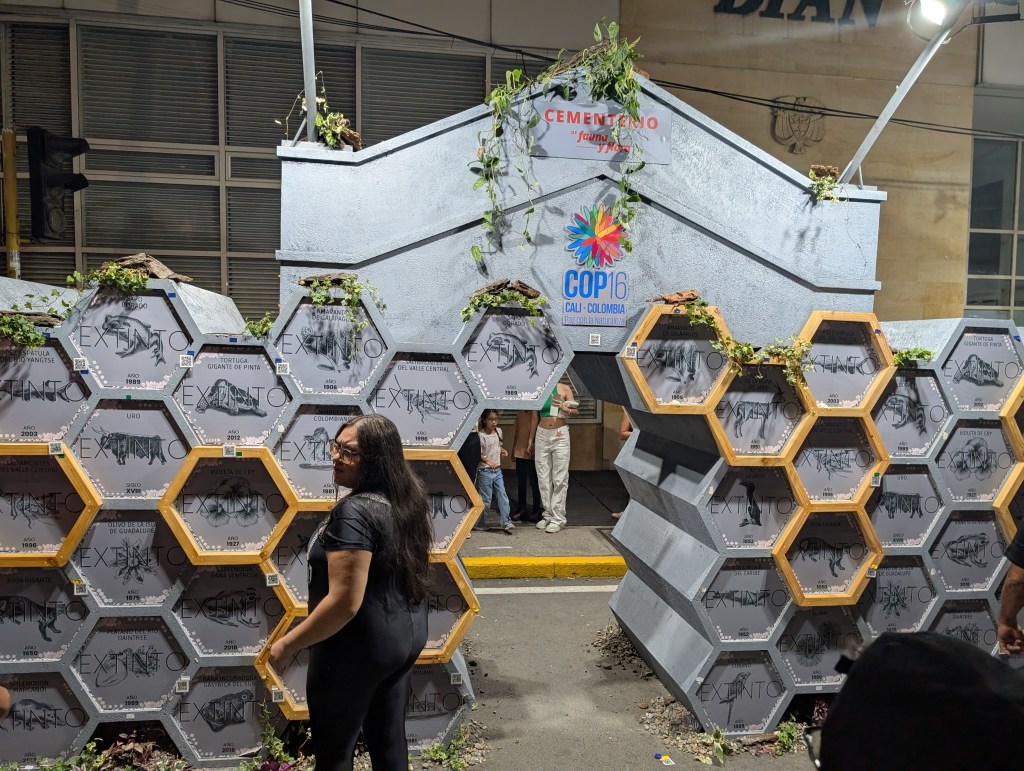

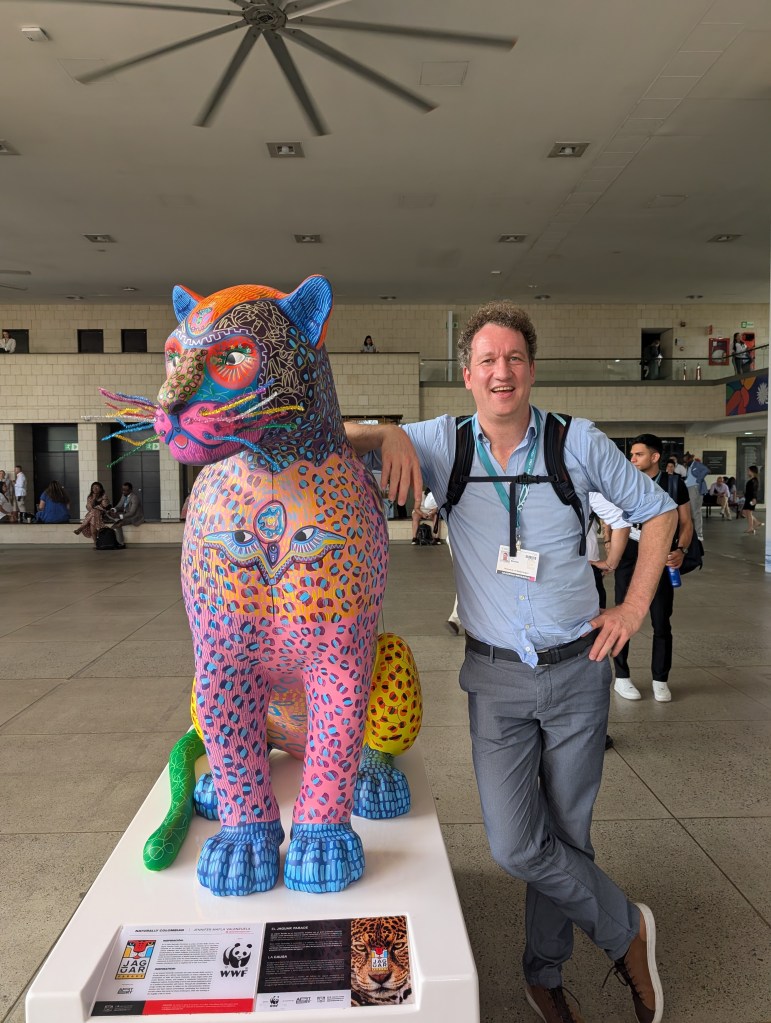
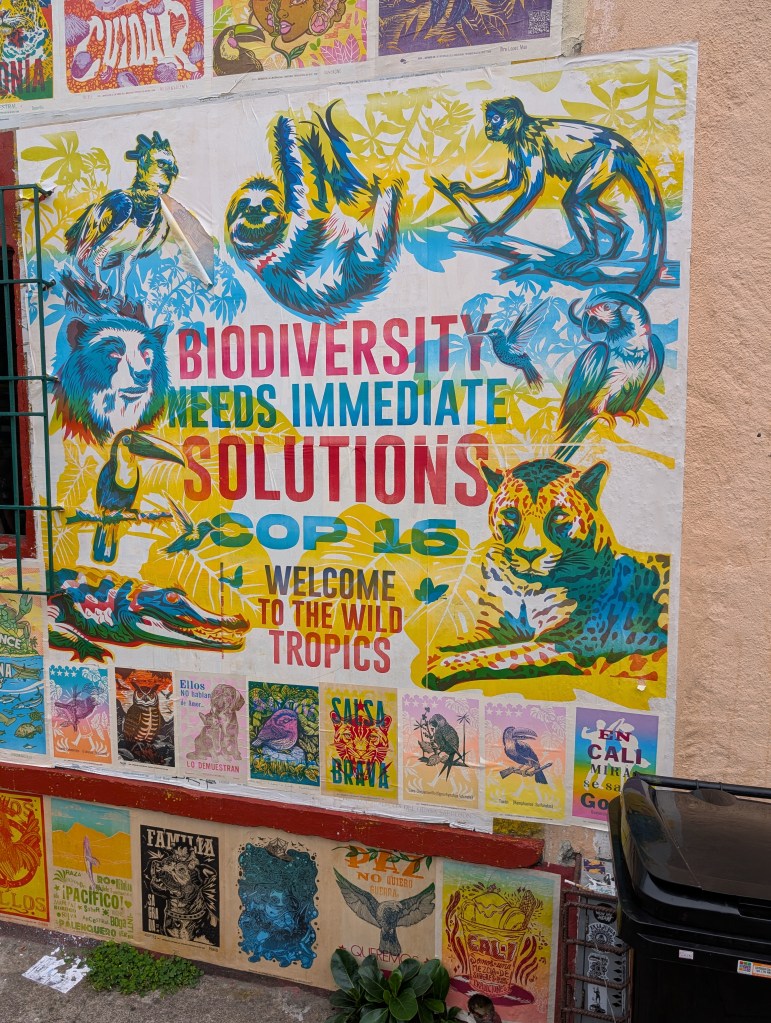
In October 2024, a few weeks ago now, I visited the global biodiversity summit in Cali, Colombia. Also known as “COP16”, it was the 16th meeting of the parties to the Convention on Biological Diversity. Two years earlier in Montréal, parties had agreed to an ambitious Global Biodiversity Framework (GBF) to protect 30% of the Earth’s surface and to reverse the trend of biodiversity loss by 2030. While ambitious, the GBF had some loose ends that needed to be resolved. These included an instrument for sharing of benefits flowing from the use of Digital Sequence Information (DSI); the establishment of a resource mobilization strategy to close the biodiversity finance gap of 200 billion USD a year; and a monitoring framework to measure progress towards 2030. With COP16, that future has arrived, but as is now the rule in global environmental politics, the future disappoints.
While the final day of negotiations was to be Friday the 1st of November, COP16 had not formally ended by then. It was suspended early Saturday morning after many delegates had already left the venue to catch their planes home. When Panama asked for a quorum count that morning around 8:30 am, a lack of quorum needed for decision-making was established and negotiations ended rather unceremoniously. The COP16 will likely reopen sometime in the coming weeks at the secretariat in Montréal or virtually, so that parties may approve the budget for the coming two years of work of the CBD secretariat (its budget ends in 2024). However, big decisions that were not taken during the meeting in Cali will likely have to wait until the next COP17 which will be held in Armenia in 2026. One of those decisions was the monitoring framework to assess the progress of the goals and targets of the GBF adopted two years ago. While a consensus text was ready to be adopted on the floor, it was considered to be a package deal together with the decision on resource mobilization strategy. The latter was stuck between calls from developing countries to create a new biodiversity fund in 2030 and the reluctance of the developed countries to do so, as two new funds were already agreed on the last two years, and “new funds do not mean new funding”, as the EU negotiator put it. As the meeting abruptly ended, neither a monitoring framework nor a resource mobilization strategy were adopted. While meeting the target of the resource mobilization strategy to mobilize 200 billion USD per year for biodiversity by 2030 was already on shaky grounds, now it has become a faraway goal.
With two of the three major decisions that were expected to come out of the COP16 having failed, at least there was success to report on the third one: DSI. A benefit-sharing instrument on Digital Sequence Information was adopted on the plenary floor only moments before the meeting was suspended. It calls for large companies that directly or indirectly benefit from the use of digital sequence information on genetic resources in sectors such as pharmaceutical and cosmetics to donate either 1% of their profits or 0.1% of their revenue in the newly agreed on “Cali fund”. That fund will be distributed by the countries themselves, but they will have to send at least 50% of that money to indigenous peoples and local communities (IPLC). A caveat on the instrument on DSI is that soft legal language was used (“should” instead of “shall”) and that one of the largest economies of the world, the US, is not a party to the CBD. Still, there is hope this could generate around a billion USD per year for biodiversity, if the relevant sectors step up their commitment to biodiversity conservation. Another clear success was the inclusion of IPLC in the negotiations of the CBD. Both the decision to establish a subsidiary body on implementation (SBI) related to Indigenous peoples and local communities and the decision to acknowledge the contributions of people of African descent to biodiversity conservation mark a step forward for inclusive conservation. While the role of IPLC in biodiversity conservation today is widely acknowledged in public discourse, their formal recognition in UN agreements was lagging behind. Reference to IPLC was still a hotly debated topic for the GBF two years ago, in Cali their role has become mainstream.
The successes above, though important, will only be able to hide the large and increasing rift between countries from the global North and the global South for so long. Countries from the global South feel that creating a biodiversity fund would fulfill a promise made over three decades ago when the CBD itself was adopted, but countries from the global North are increasingly reluctant to send financial resources to countries that they feel do little to change the status quo of nature conservation. They therefore prefer to look towards the private and financial sector, as well as to philanthropists, to step into the finance discussion. Developing countries, however, argue that finance is not just a question about numbers, but also about justice. The COVID pandemic has left them with major public debts that they struggle to manage. While countries from the North have also made debts to combat COVID, they pay little interest on those, and their economies have mostly recovered already. But developing countries are considered high-risk to creditors, not in the least because of biodiversity loss and climate change, and thus pay high interest rates to foreign creditors, leaving them little leeway to invest in nature. Some recognize this issue and remember that developing countries have faced such debt crises before in the 1990s, a reason to adopt the Millenium Development Goals at the time. So, debt-for-nature swaps have been hotly debated during the COP16 side events, but only small examples of successful use of that instrument are available today. Zooming out, we continue to witness a desire for financial instruments such as biodiversity credits or certificates to do the trick, even if we at the same time are well aware such instruments will never mobilize the magnitude of finance needed for curbing biodiversity loss at scale. The result is that we see countries from the global South being stuck in feelings of injustice, whereas the global North remains captive of fantasies of green markets and the good intentions of the rich.
Today, we end up in a moral conundrum fueled by global distrust and by the breaking of a multilateral world order. While the global North continues to keep its money purse closed, the global South is increasingly embittered about issues of global justice. Just before the COP16 was suspended, harsh words were flung by Bolivia and Brazil towards the global North on the financial situation and there was no time left to resolve it. Such an ending does not build trust for future meetings and undermines the spirit of global multilateralism. You could argue that the presidency of Colombia, with the adoption of a few important decisions on IPLC and DSI, fulfilled their promise to the people of Colombia. Cali was chosen as a venue especially because it is home (or close to home) to so many indigenous peoples and to so much biodiversity at the same time. A decision on the benefit-sharing of genetic resources moreover fits the ideals of the current government on the political left. And it must be said that Susana Muhamad, as the Colombian chair of the COP16, worked as hard as she could to get the other decisions through as well, but seems to have miscalculated the reality of global environmental politics. By hoping that all the difficult decisions would be resolved on the final day of the meeting, she set up the meeting for the outcome we have today. The new executive director of the CBD, Astrid Schomaker, did not seem to have helped much and was moreover noticeably absent from the public view. Looking back, one cannot escape the notion that more could have been done to build global consensus on resource mobilization, which is so hardly needed to reverse the ongoing trend of biodiversity loss. More importantly, what was missing was a global community that wants to protect the earth for all humans and non-humans equally. While Colombia successfully created a “COP for the people” in the city center of Cali that many local people enjoyed and were inspired by, a “COP for the world” was nowhere to be found. To be expected? Maybe, but it is a sad reality to report on.
6th – 9th November 2023
Tuscany, Italy
Project Writing Retreat
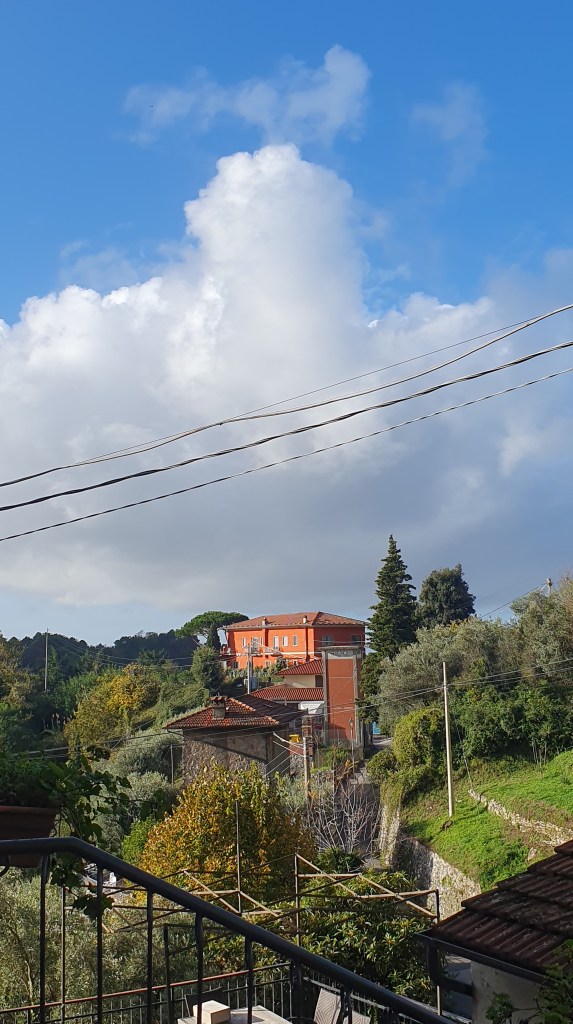
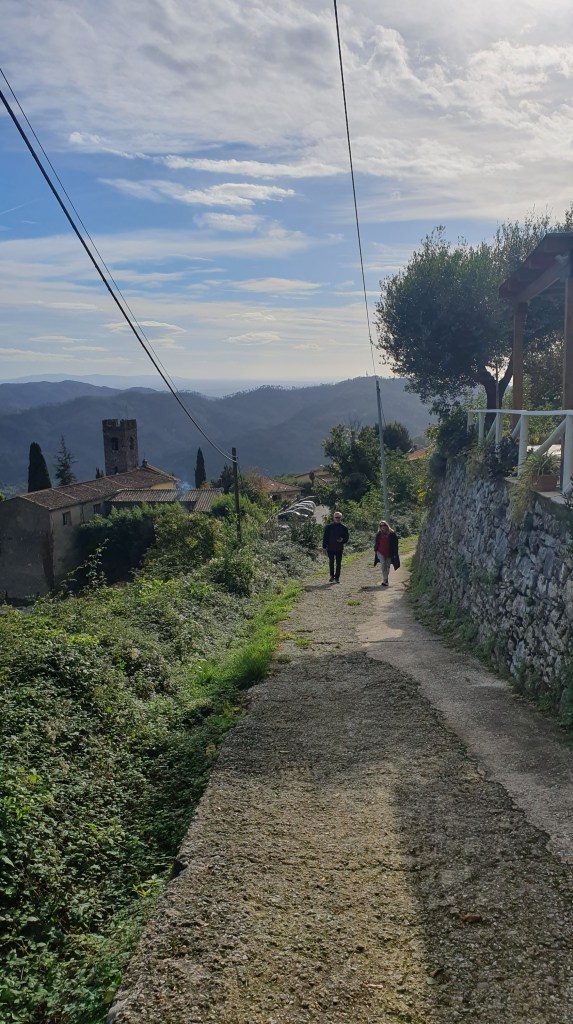
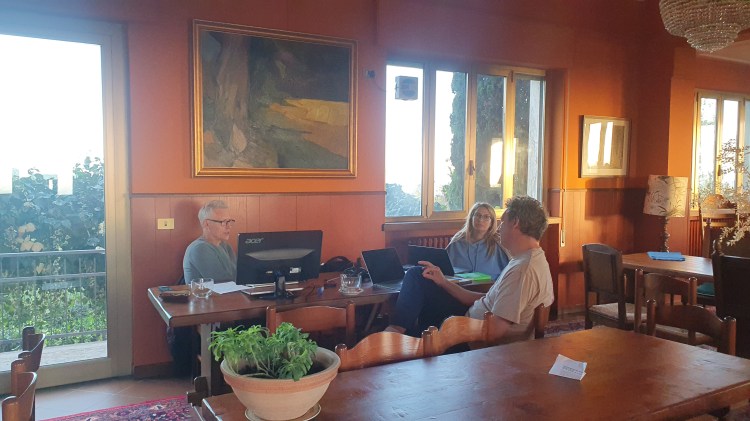
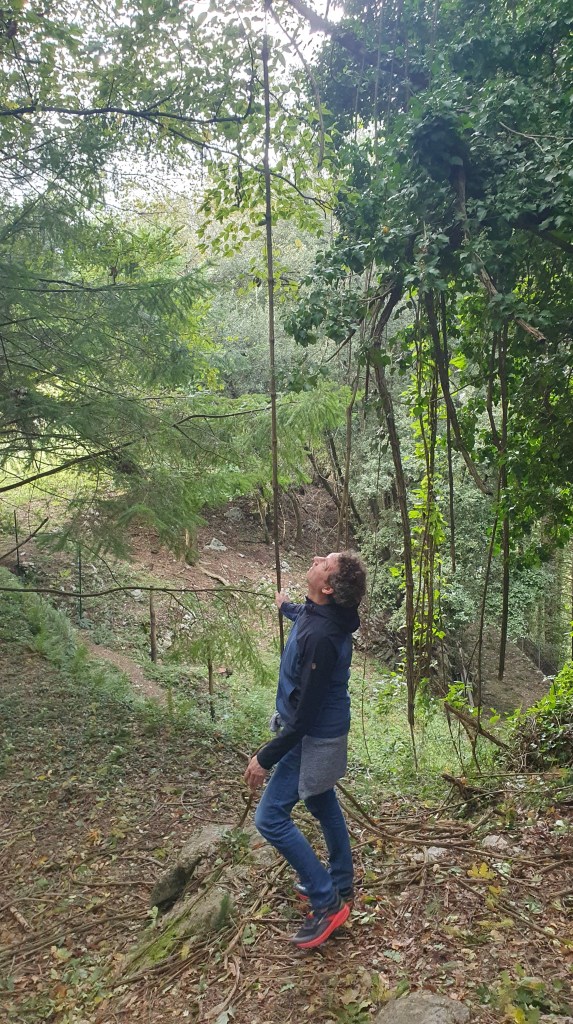
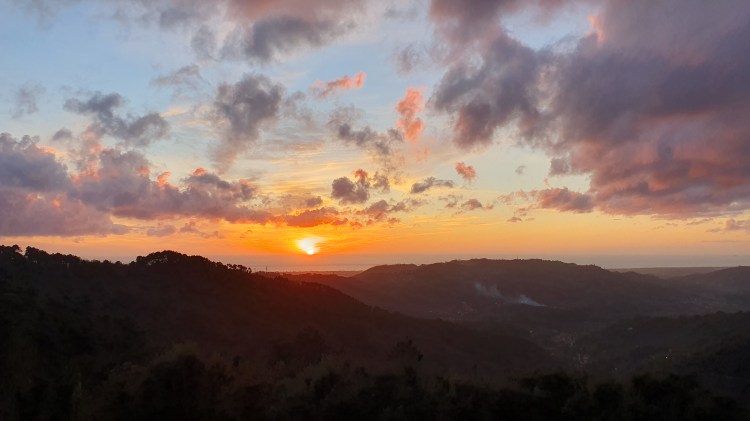
In November 2023 project members (Ayşem Mert, Jason Glynos, Jelle Behagel and Julia Feine) met in Tuscany, Italy for a project-intern writing retreat to focus on work on the project publications and discuss how the different papers talk to each other. Inspired from walks along the steep slopes of the Tuscan hills we spent three days to focus on developing articles on emerging nature fantasies after COVID.
12th – 14th July 2023
Amsterdam, The Netherlands
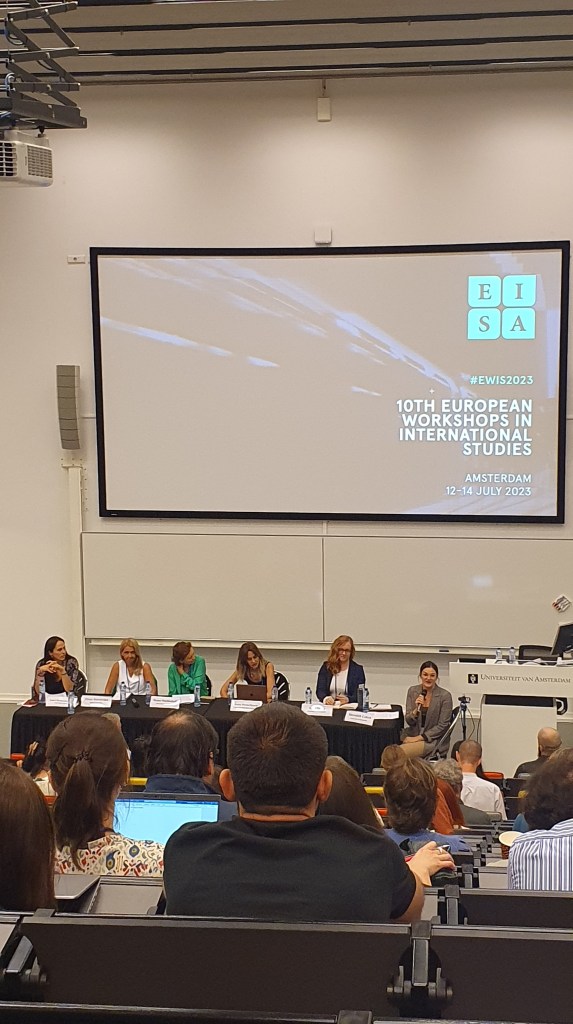
10th European Workshops in International Studies
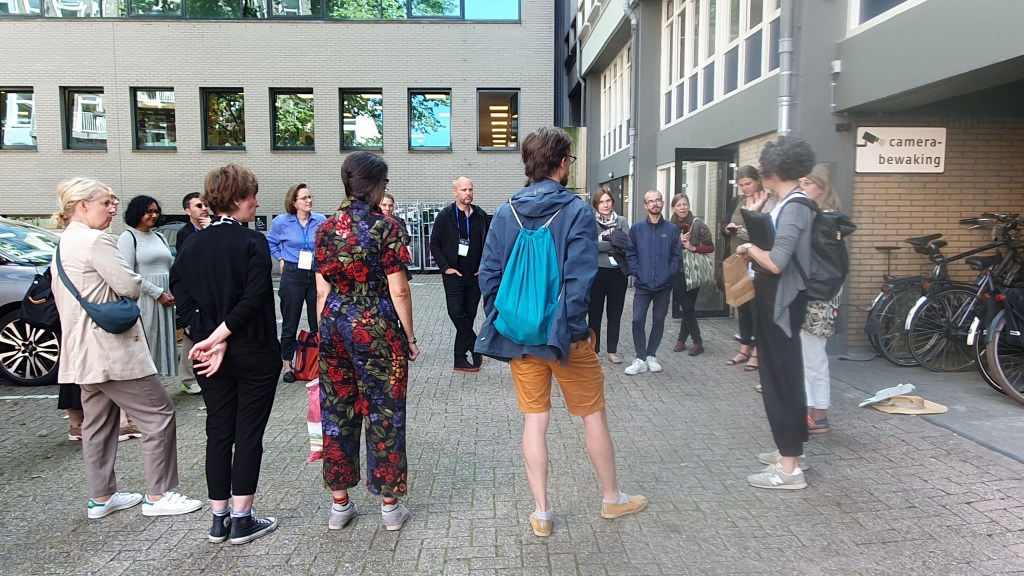
In the middle of July the 10th European Workshops in International Studies of the Euroepan International Sutdies Association took place in Amsterdam.
Ayşem Mert co-organised the event that was headlined Care, Compost, Capitalism, and Cats: Dissident Anthropocenes / Dissident Scholarship. The programme featuered several roundtables with topics ranging from gender over borders to futures.
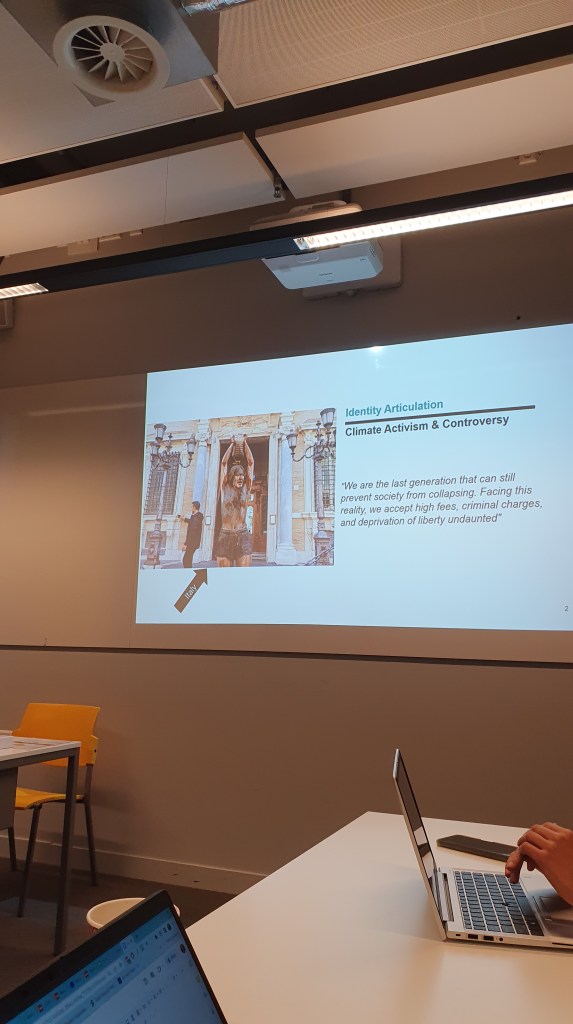
Julia Feine presented her work on oceans and Ayşem Mert shared our work on Post-Pandemic Futures.


27th and 28th June 2023
Laussanne, Switzerland
Workshop: First Things First!
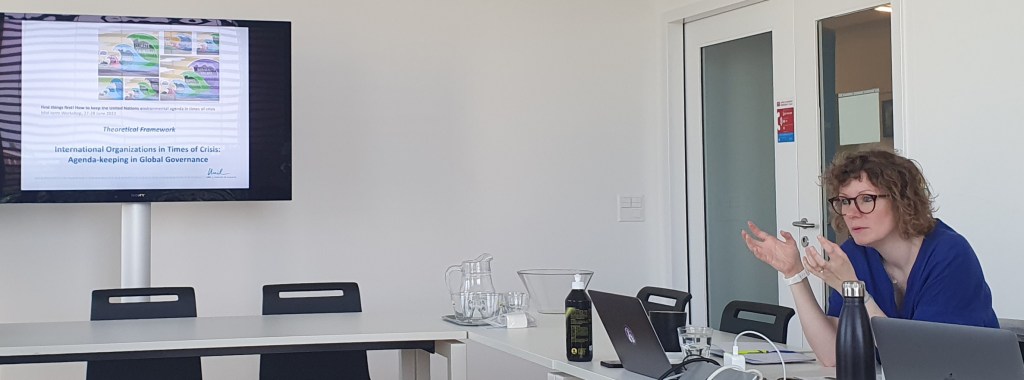
At the end of June Ayşem Mert participated in a workshop of Lucline Maertens at the project First Things First – How to keep the United Nations environmental agenda in times of crisis? She presented her and Elise Remling’s article Changes in the practices and narratives of the United Nations High Level Political Forum during the COVID 19 pandemic.


22nd June 2023
Amsterdam, The Netherlands / Online
Roundtable: Law’s role in sustainable globalization – Crises, tragedy and transformative possibilities
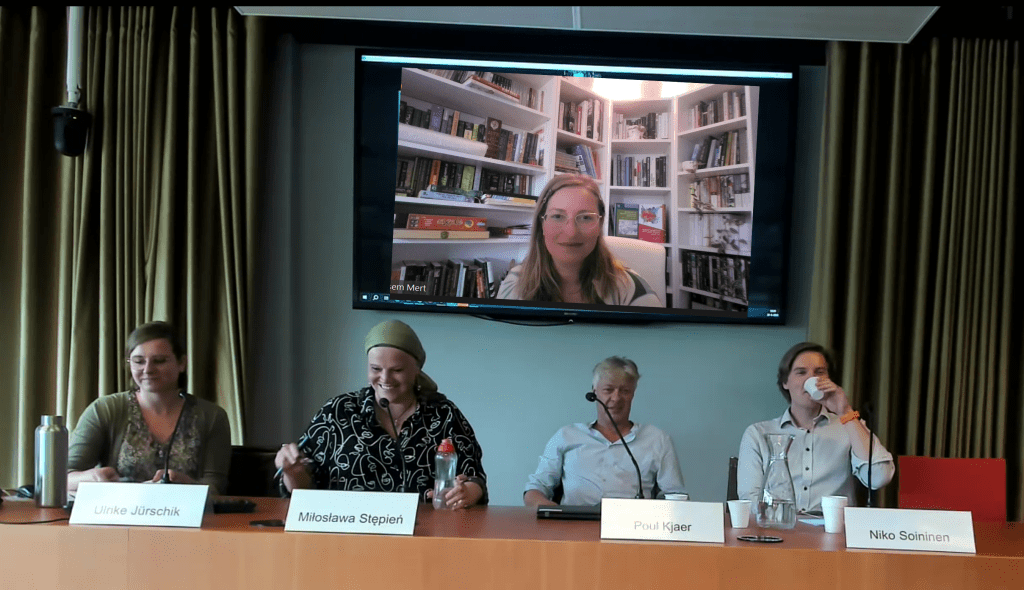
Ayşem Mert participated on the roundtable What’s in a name? ‘Transformations,’ ‘Transitions’ and the currentcritical moment at the Law’s role sustainable globalization conference. The conference was held at the Amsterdam School of Law.
7th June 2023
Duisburg, Germany / Online
Critical Beach Studies Workshop
– being knowing and governing on the beach
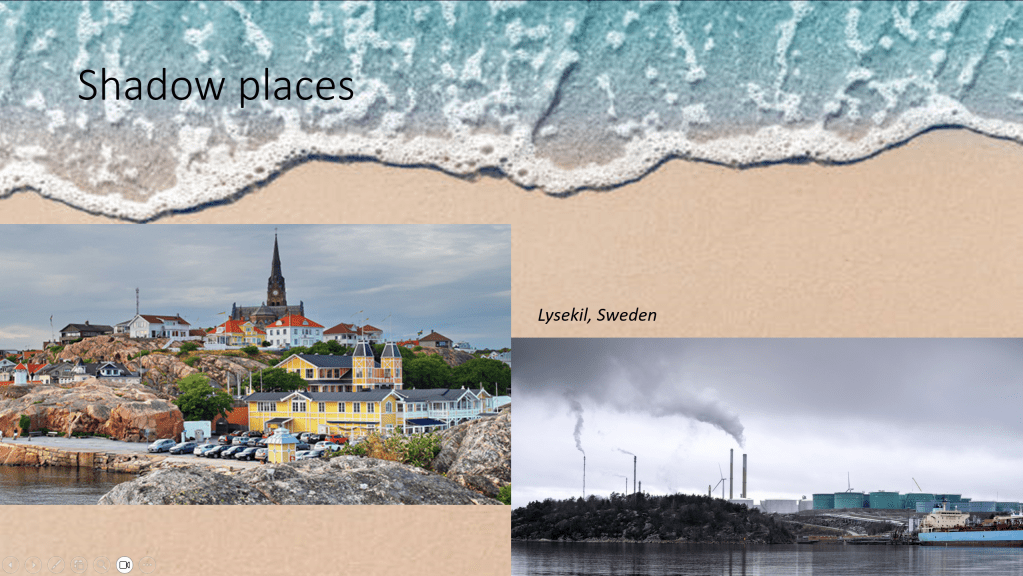
In early June Ayşem Mert was part of the panel Fantasy and the Beach at the Critical Beach Studies Workshop organised by the Centre for Global Cooperation Research ot the University Duisburg-Essen.


20th April 2023
Stockholm, Sweden
EPPLE Workshop
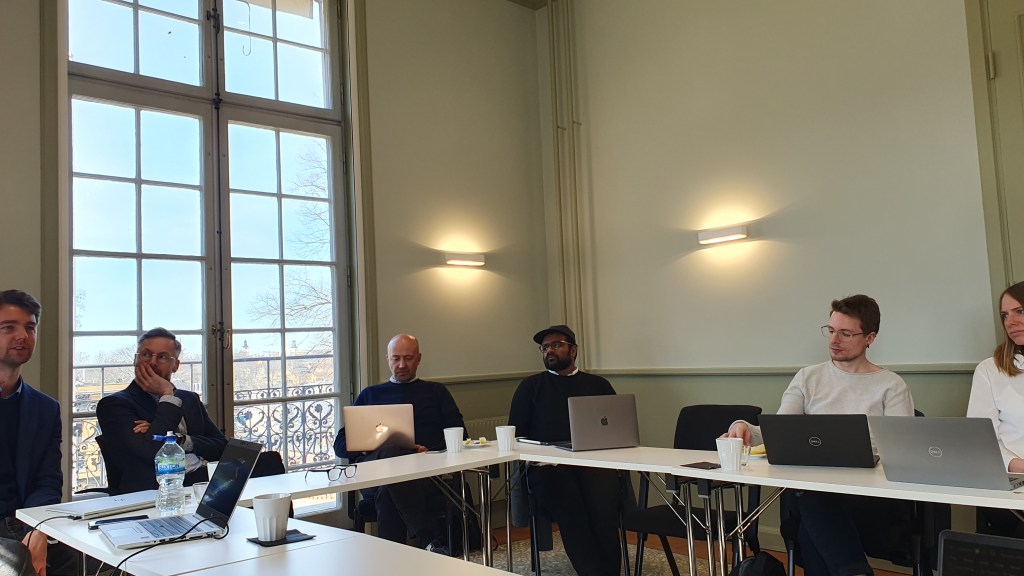
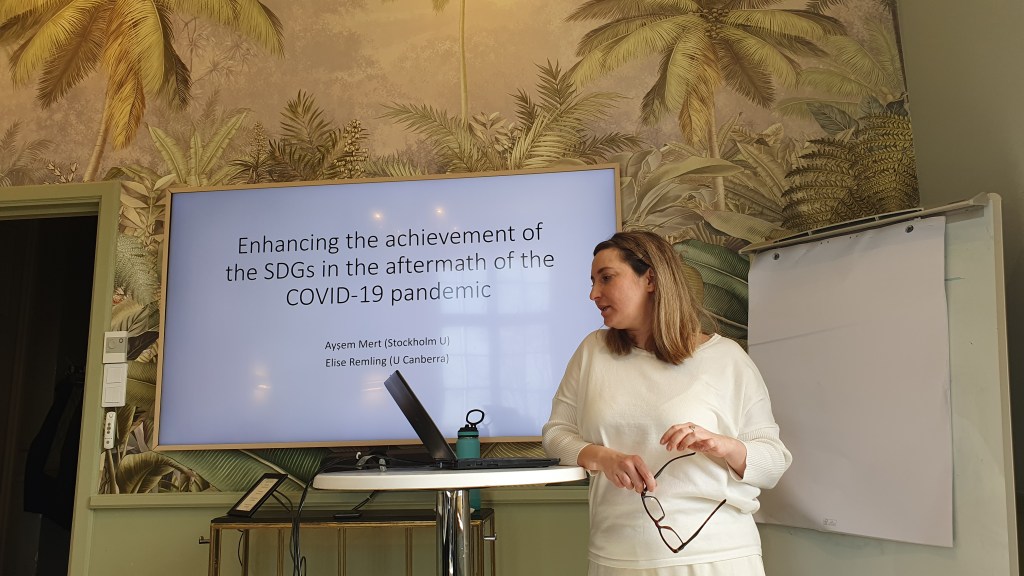
As part of the Stockholm University’s Department of Political Science’s Environmental Politics, Policy and Learning (EPPLE) Seminar researchers from EPOC presented their upcoming papers.
Ayṣem Mert presented the article “Global Environmental Politics is fantasmatic: Developing a critical fantasy studies perspective on crisis politics”, which she co-authored with Elise Remling.
Julia Feine presented her and Ayṣem Mert’s article “Fantastic oceans – an analysis of ocean fantasies at the start of the Ocean Science Decade”.

31st March 2023
Online
Book launch: The Palgrave Handbook of Global Politics in the 22nd Century

Our researcher Ayşem Mert co-edited alternative imaginaries book “The Palgrave Handbook of Global Politics in the 22nd Century”. Friday the 31st of March 2023 the book launch took place.
In the online launch event moderated by Sonia Lucarelli (Bologna), the book editors Franziska Müller (Hamburg) and Laura Horn (Roskilde) provided a brief outline of book, highlighting what academic science fiction can contribute to IR. Several contributors offered flashtalk presentations of their chapters, and then there was a Q&A.
Part of the book were several artistic illustrations, a few of which you can see down below.
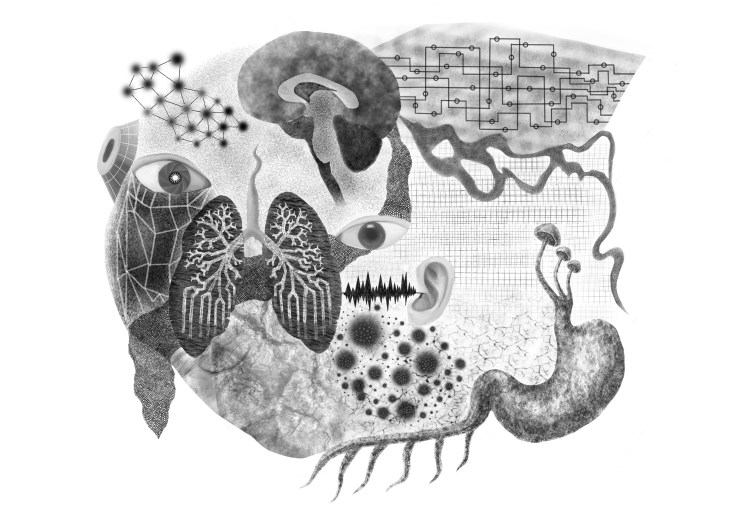
Shades of Democracy in the Post-Anthropocene

Ignored Histories, Neglected Regions: Origins of the Genosocial Order and the Normative Change Reconsidered
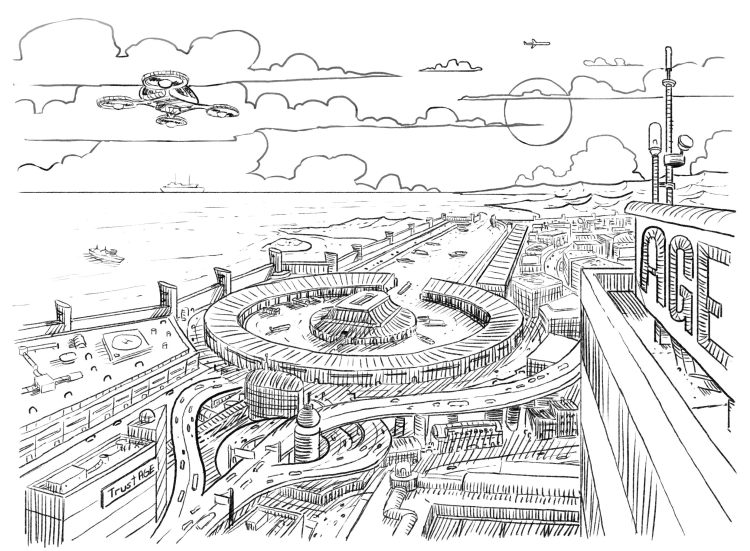
The Origins of AGE: From States and Markets to Scientific Methods
27th-30th March 2023
Amsterdam, The Netherlands
EPOC 2023 Amsterdam Workshop and Research Co-Creation Sessions
End of March our research team met with the societal participants assembly members, other stakeholders and many more to work on the project. The meeting took place at the UVA Humanities Venture Lab.
In various co-creation workshops the team worked three days on the future of EPOC. We also conducted a shared walks-session.
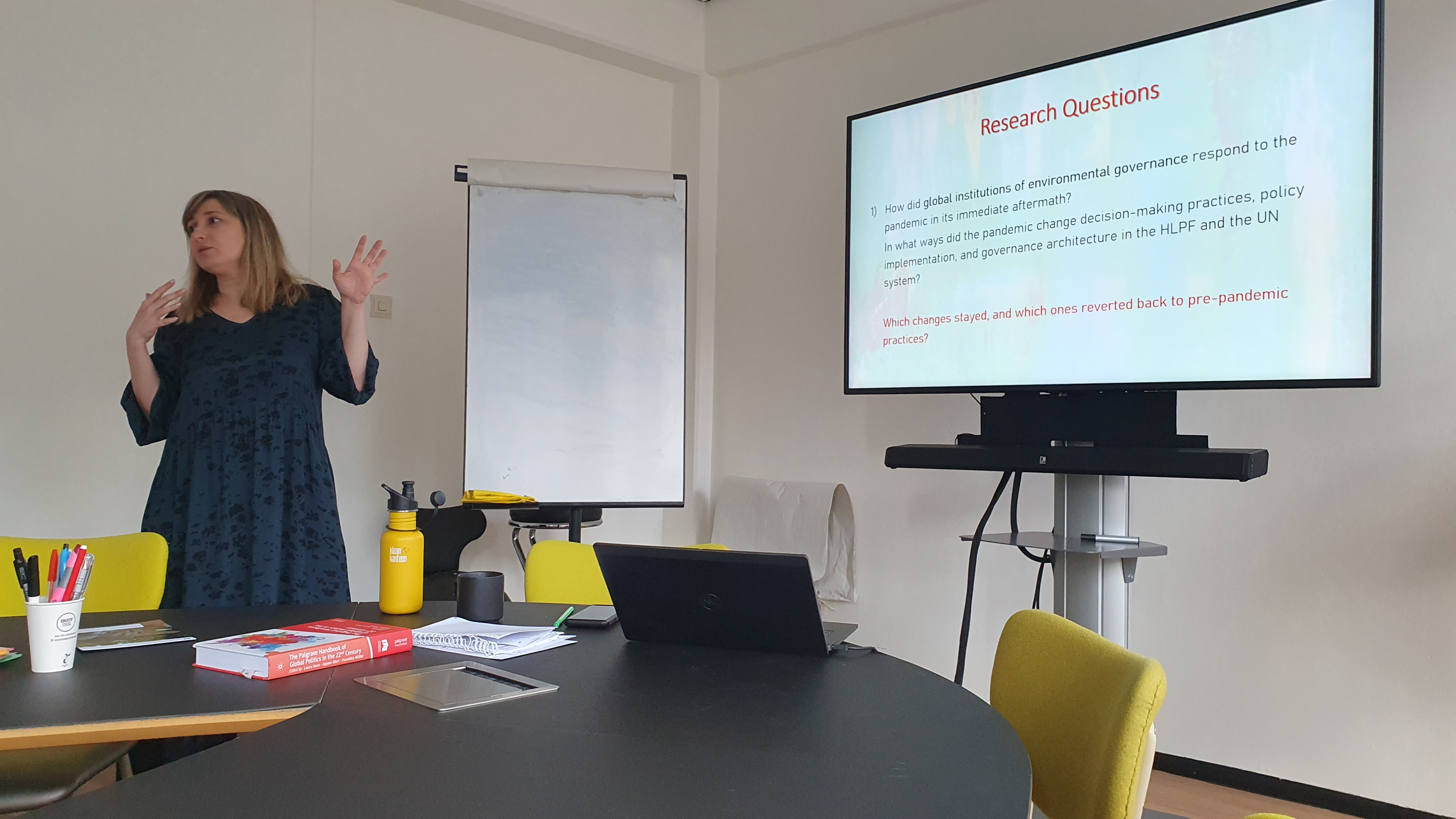
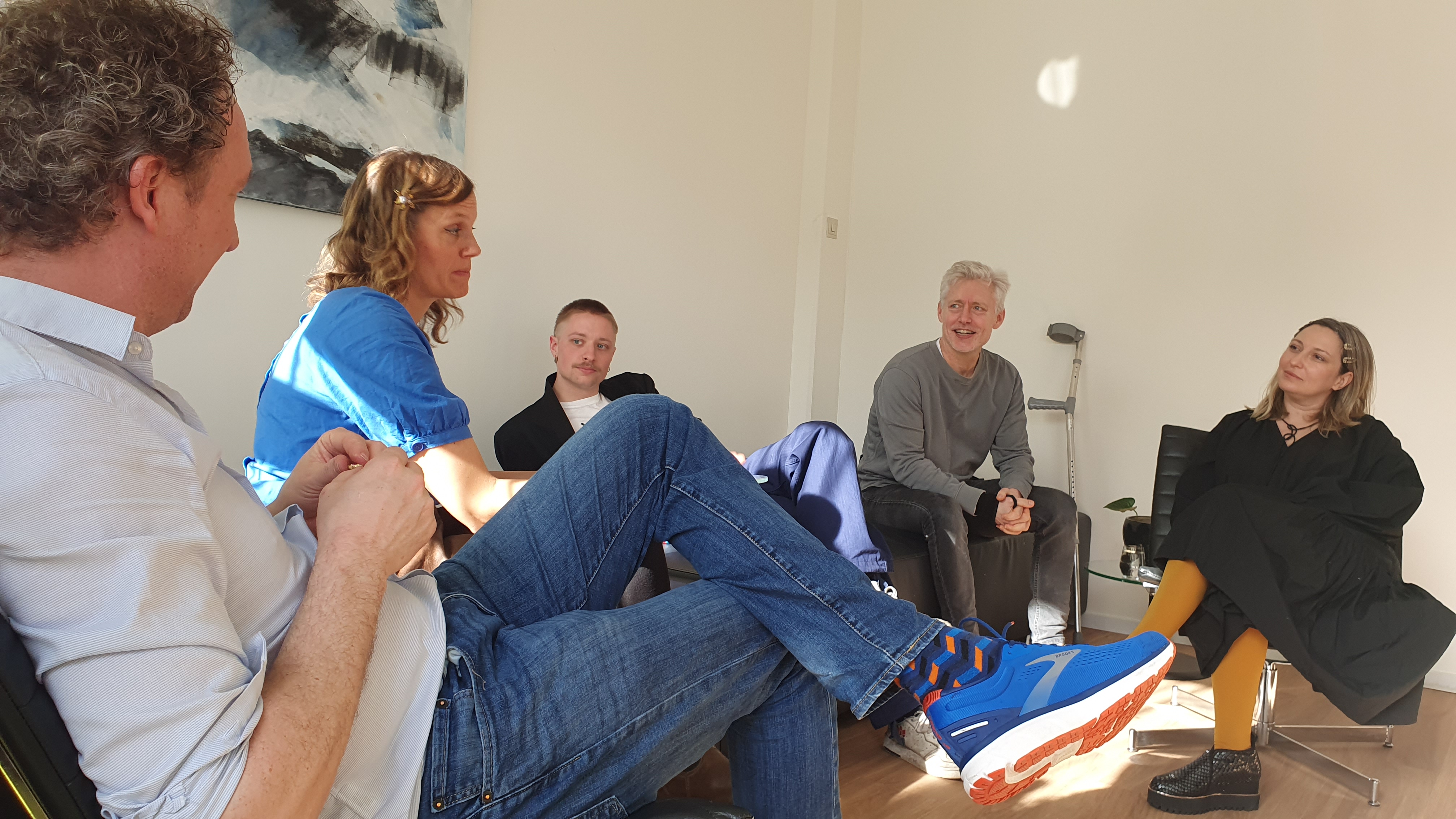

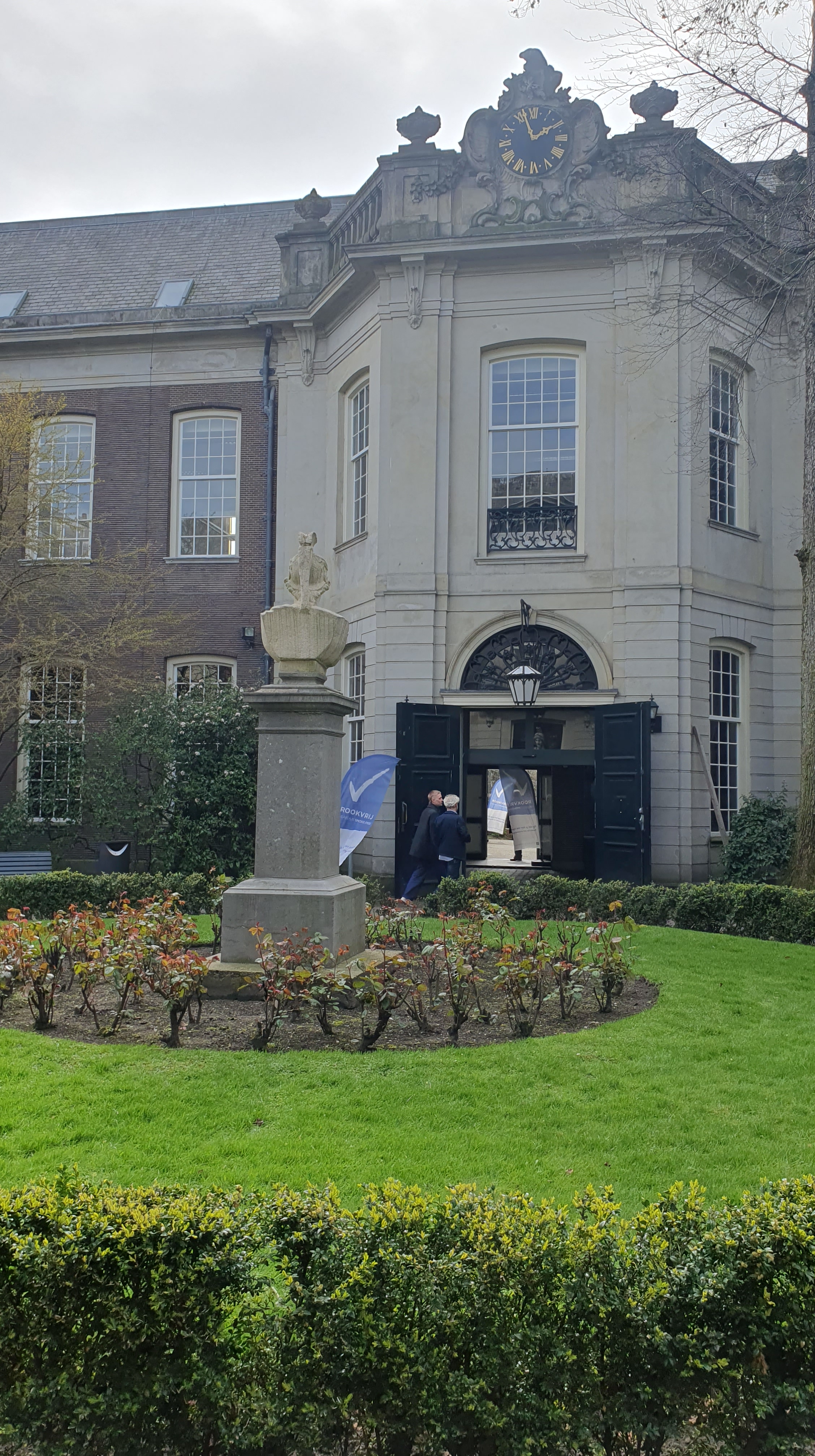
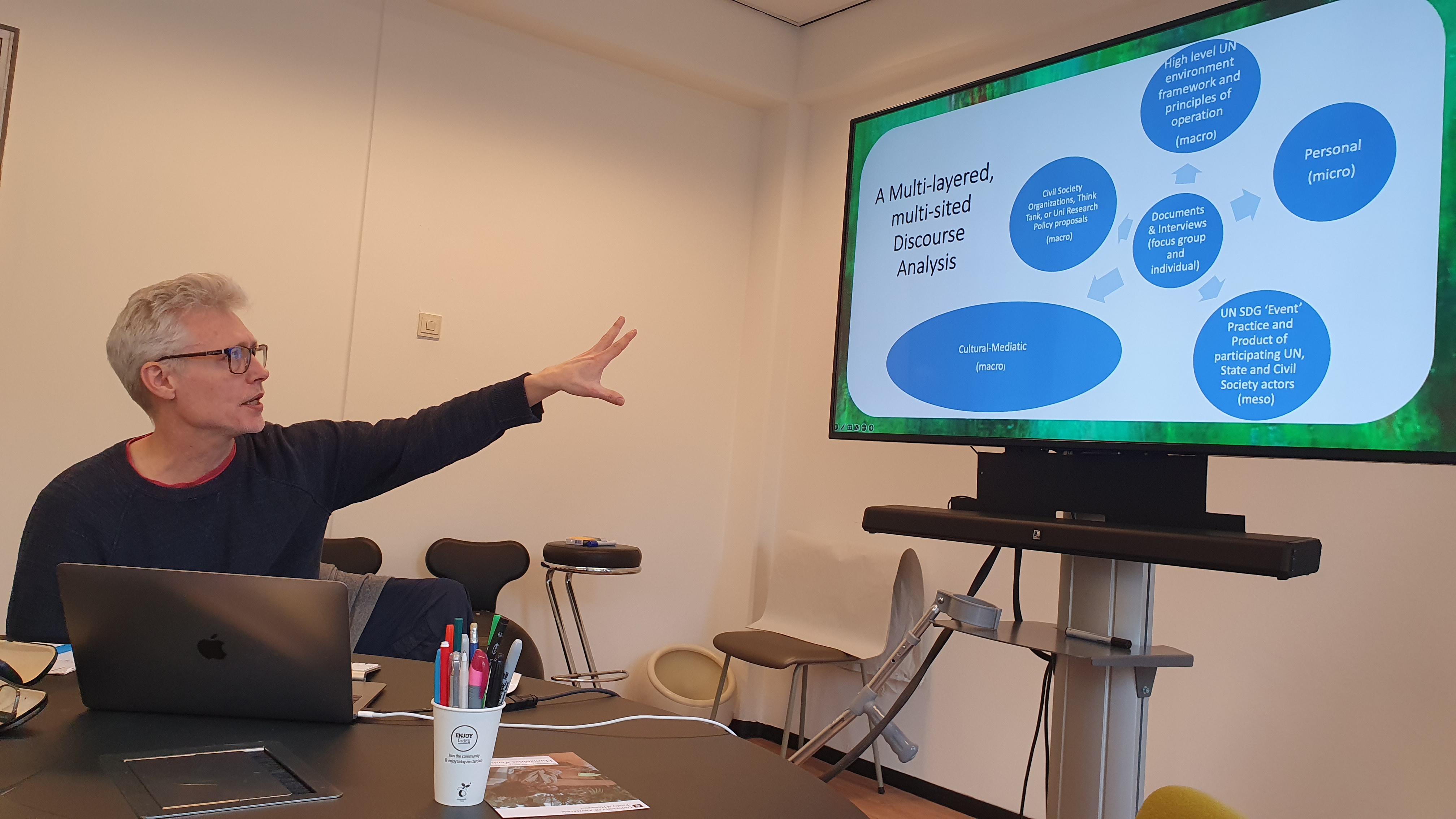
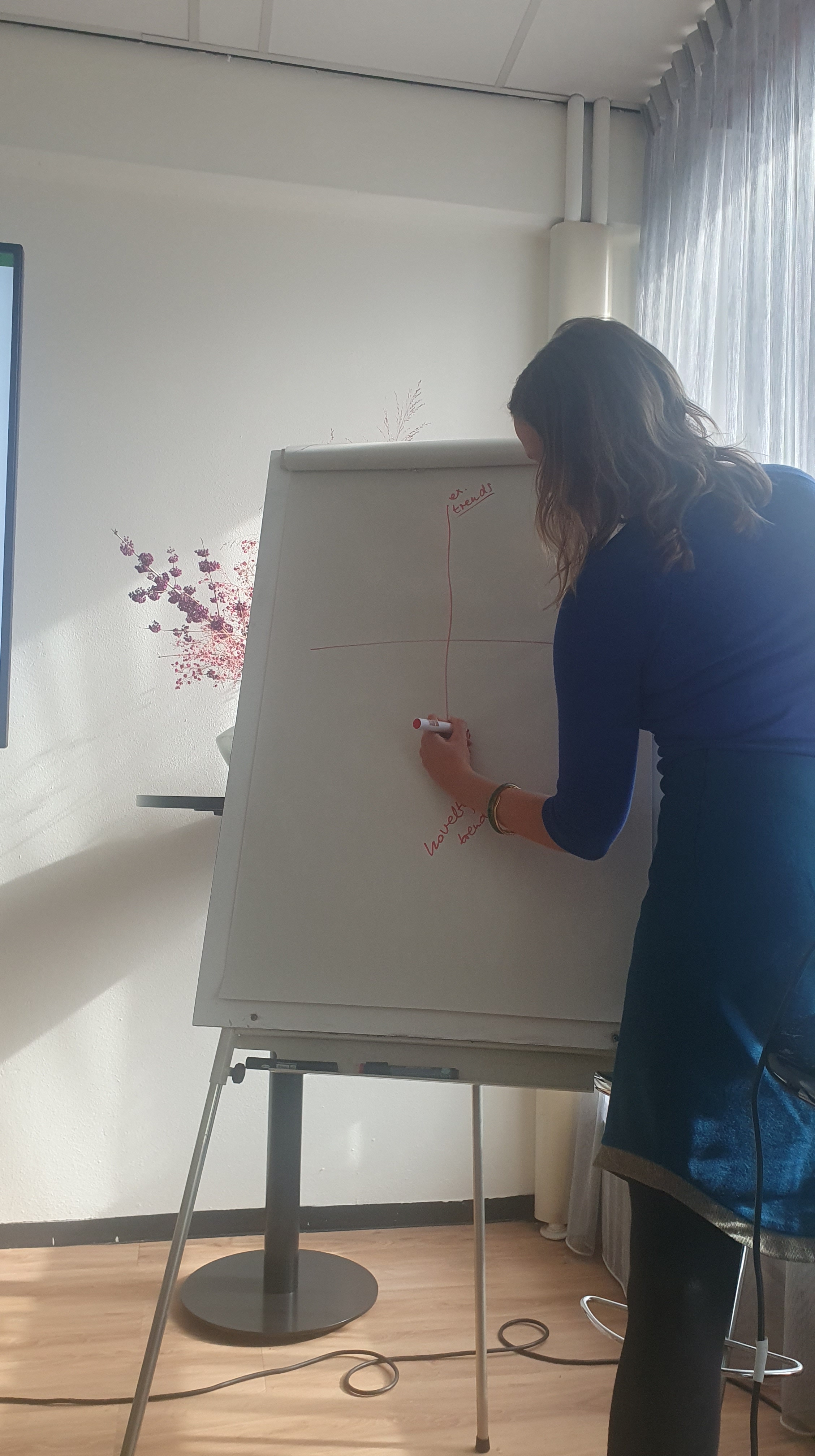
Research Co-creation Workshops
These aim to establish dialogue and information flow between researchers and stakeholders, who co-produce parts of our research. Key stakeholders to the HLPF and the SDGs as well as activists, thinkers, and citizens from various related networks are invited to provide their input through reflection sessions and focus groups.
- In the reflection sessions, stakeholders assist researchers to generate and interpret themes, identify priorities and turning points, and reflect on what they think would be a good way to think, explore, and share the research.
- In the focus groups the priorities of the researchers provide the structure of the agenda, and the stakeholders provide more traditional input.
Shared Walks
Shared Walks is an initiative that opens a playful space for the exploration of the environment and others by walking. Based on this artistic/urban/participatory methodology, Shared Walks / Climate Change Edition* was developed to respond to the climate emergency by walking and exploring urban and rural environments to trace our experiences about the influences of climate change and the relationships between the human psyche and the more-than-human environment. For more information about the methodology go to the website http://www.sharedwalks.com/ClimateChangeEdition.html.
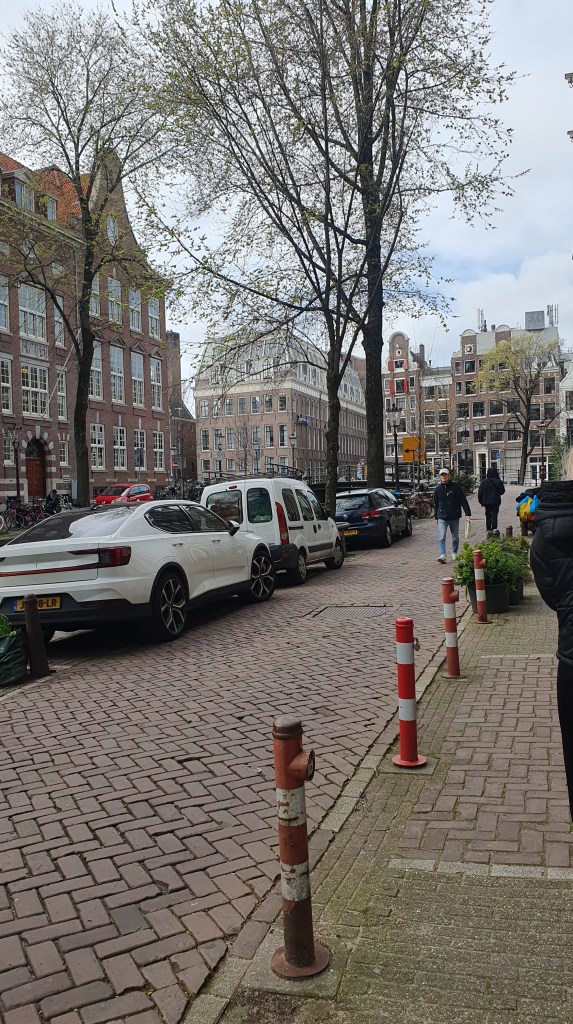



* Shared Walks was initiated in Vienna in 2018 by Eylem Ertürk and Bernd Rohrauer. Shared Walks / Climate Change Edition was developed in 2020/2021 by Eylem Ertürk in collaboration with Dr. Ayşem Mert, for the EPOC project.
23rd-24th March 2023
Palace of the Academies; Brussels, Belgium
Discourse Theory: Ways Forward – Colloqium
The second iteration of the “Discourse Theory: Ways Forward” colloqium took place in Brussels the 23rd and 24th of March. The EPOC team took part various panels.


The event included a session on the EPOC project with three papers from the research team.
Julia Maria Charlotte Feine & Ayşem Mert: The role of fantasies in reaching “the Oceans We Want”
Jelle Behagel: Fantasizing about the world and nature
Elise Remling: Putting the world back on track: political fantasies of “recovering” the SGDs in the face of multiple crisis”
21st of March 2023
Online
Futuring Global Politics – or why everyone should write science-fiction
Based on the newly puhlised “Palgrave Handbook of Global Politics in the 22nd century” Franziska Müller and Isabella Hermann spoke about why scholars of International Studies use science-fiction as a method to imagine the world a hundred years in the future. Ayṣem Mert supported them.
12th of January 2023
Online
Radical biodiversity politics: COP15 & Beyond
Our Researcher Jelle Behagel was on the roundtable “Radical biodiversity politics: COP15 & Beyond”. It took place Thursday the 12th of January from 18:00 to 19:30 CET.
1-4 September 2022
Panteion University Athens, Greece
15th EISA Pan-European Conference on International Relations
The 15th EISA Pan-European Conference on International Relations was held in Athens. The EPOC team has taken part in various functions.




- As part of setting the stage for the conference, Ayṣem Mert was one of the speakers of the Semi-Plenary on Pandemonium: World Politics in the End Times. Ayṣem also co-organised the conference section on Future as Method Beyond Dys/Utopia – rethinking IR, dreaming of the apocalypse with Dr. Laura Horn (Roskilde University).
The section included a panel on “Writing the future of Global Politics”, where Ayṣem Mert and Laura Horn launched the book they have co-edited with Prof. Dr. Franziska Mueller (Hamburg University) titled The Handbook of Global Politics in the 22nd Century. Jelle Behagel and Jason Glynos chaired the session and discussed the work, respectively.
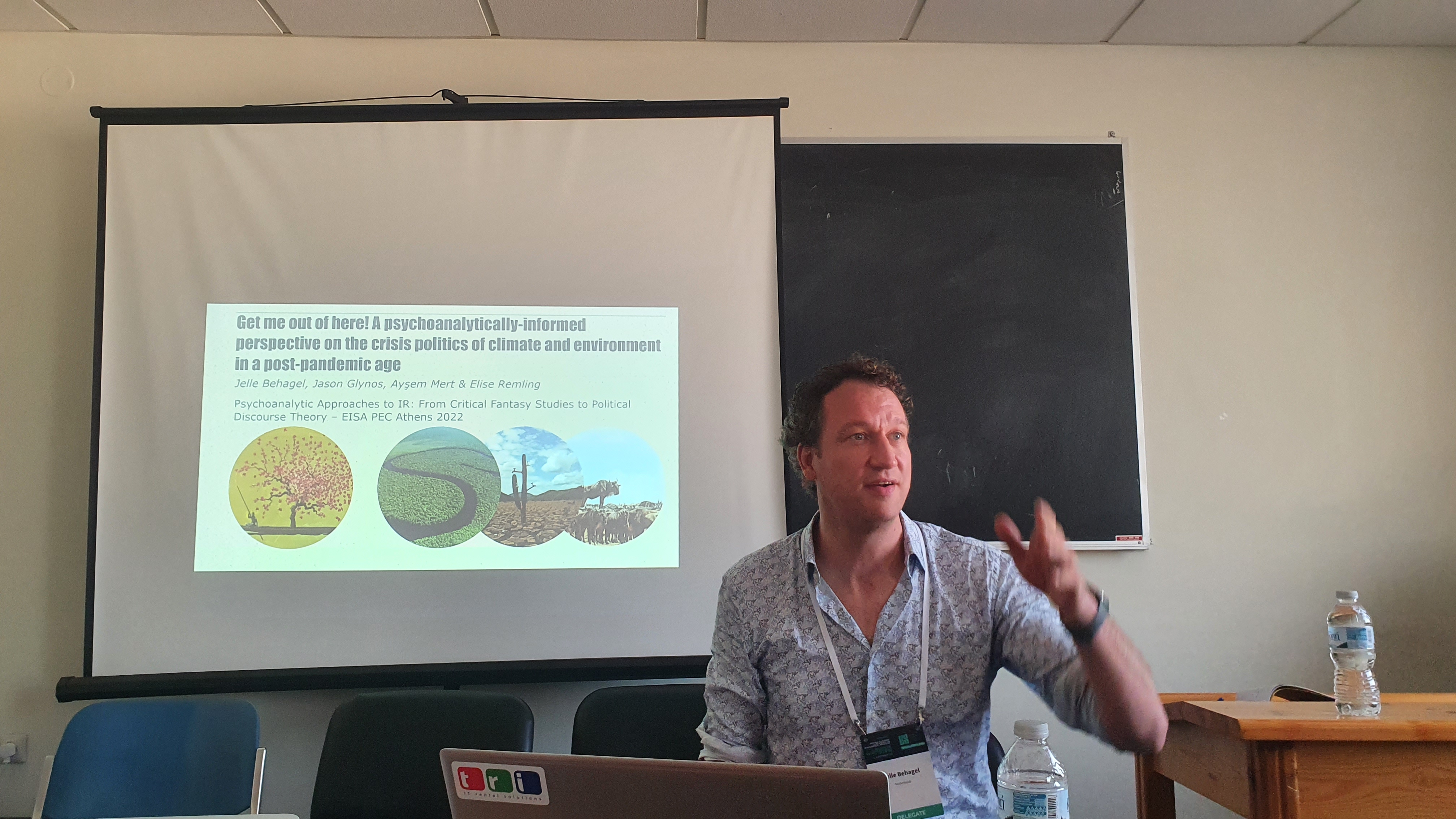
- Elise Remling, Jelle Behagel, and Jason Glynos presented their work in the panel “Get me out of here! A psychoanalytically-informed perspective on the crisis politics of climate change in a post-pandemic age”. Julia Feine presented ““The ocean we want” – but what do we want? A discourse analysis of future imaginaries in global ocean governance”.
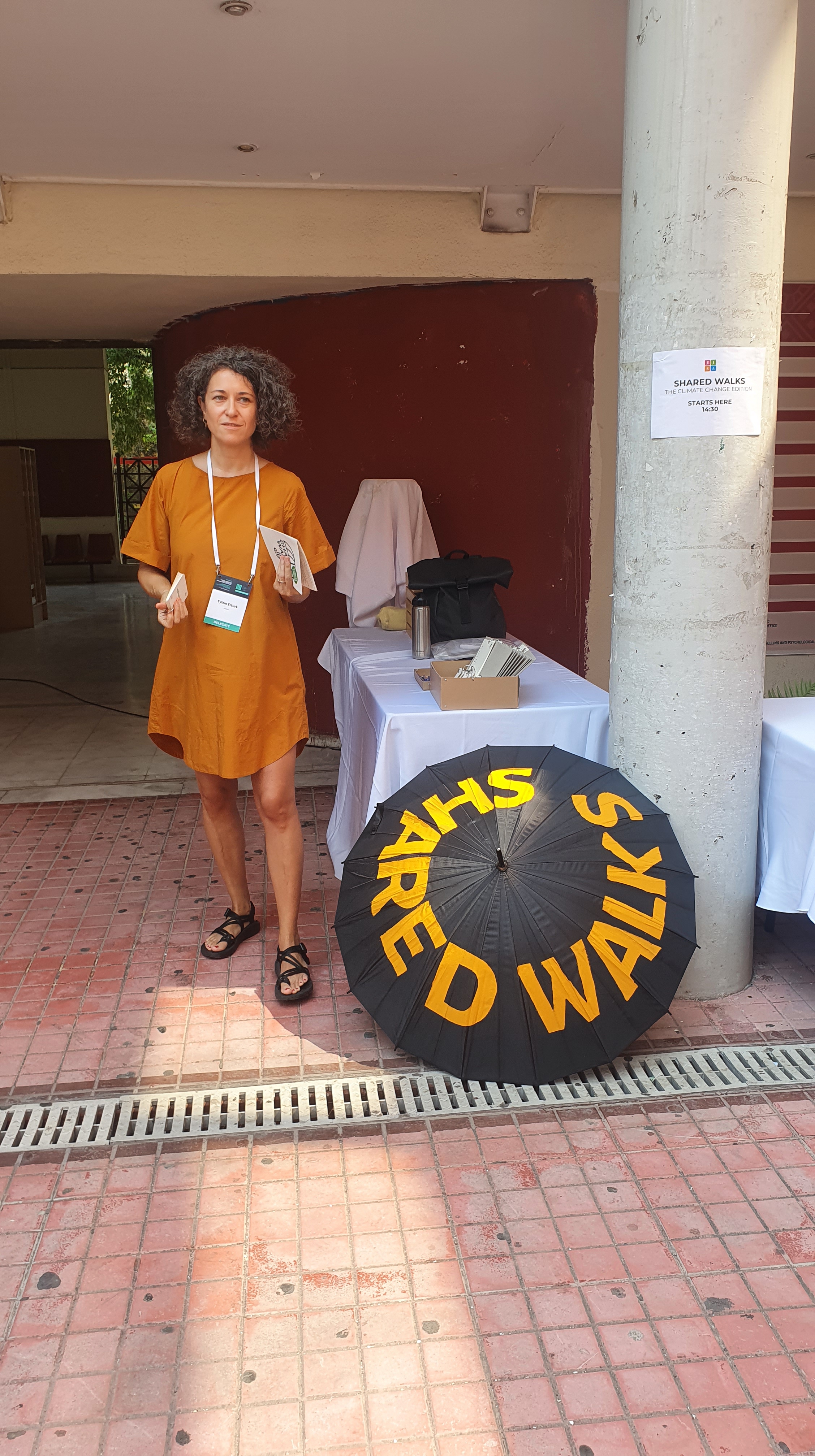
- One of the highlights was the walkshop Shared Walks / Climate Change Edition: Sensing the post-pandemic urban spaces organised by the EPOC team and Eylem Ertürk. Walking in Athens, the project team and other participants utilised the participatory, urban, and artistic methodology of SHARED WALKS / CLIMATE CHANGE EDITION*, and shared their reflections afterwards, facilitated by Eylem and Ayṣem.
15 March 2022
OCC! Stockholm, Sweden
(online)
Occupy Climate Change! (OCC!) Atlas of the Other World
OCC! launch the project called “Atlas of the Other World” that has been ongoing since 2018. It provides a collection of urban grassroots and city initiatives tackling climate change and people’s creative stories about the future. Ayşem Mert contributes to the event by presenting her work on urban climate adaptation and the negotiation of climate related loss, and how the global ‘we’ translates into the local scale in the context of democracy in the Anthropocene.
November 2021
Centre for Global
Cooperation Research (online)
Project Publication : “Critical Fantasy Studies Meets Global Cooperation Research: A New Research Agenda for Investigating Crisis Politics“
Published by the Centre for Global Cooperation Research, and written by Ayşem Mert this publication presents to the readers EPOC’s motivations and research agenda. At the same time, it introduces Critical Fantasy Studies and the use of qualitative methods, in particular the further developed Shared Walks participatory method.
23 November 2021
Centre for Global
Cooperation Research (online)
Research Colloquium: Get Me Out Of Here!
Ayşem Mert is part of a research group for Global cooperation and diverse conceptions of world order within GCR21. This event held in the presence of other esteemed researchers including Dr. Eastwood delves into psychoanalytic findings and insights of crisis politics brought about by the COVID-19 pandemic. More on this research can be found below and via the GCR21 Quarterly Magazine.
17 November 2021
Centre for Global
Cooperation Research (online)
COP26 Discussions with Dr. Lauren Eastwood
Ayşem Mert virtually meets up with Dr. Eastwood from the Centre for Global Cooperation Research just days after the COP26. An exchange of ideas and debates took place in light of the decision-making, planning and progress of climate action, politics and negotiations.

11 November 2021
Glasgow, Scotland
COP26 Interview with Stockholm University
As a climate researcher and associate professor of political science Ayşem Mert describes her field of work, concerns, COP26 promises and #EPOC2025 in the latest interview held by Stockholm University.
31 October – 12 November 2021
Glasgow, Scotland
2021 United Nations Climate Change Conference (COP26)
Fieldwork
The first leg of fieldwork for EPOC takes place at the 26th Conference of the Parties held in Glasgow, Scotland, where the main issues are forests, climate finance and implementation of the Paris Agreement. Ayşem Mert participates in meetings and does ethnographic observations and interviews at COP26, based on the questions provided by the research team.
At this point, our questions focus specifically on Module 2: Mapping (2021 – 2022), led by Elise Remling, e.g. how climate and sustainability governance practices and politics have changed after the pandemic.
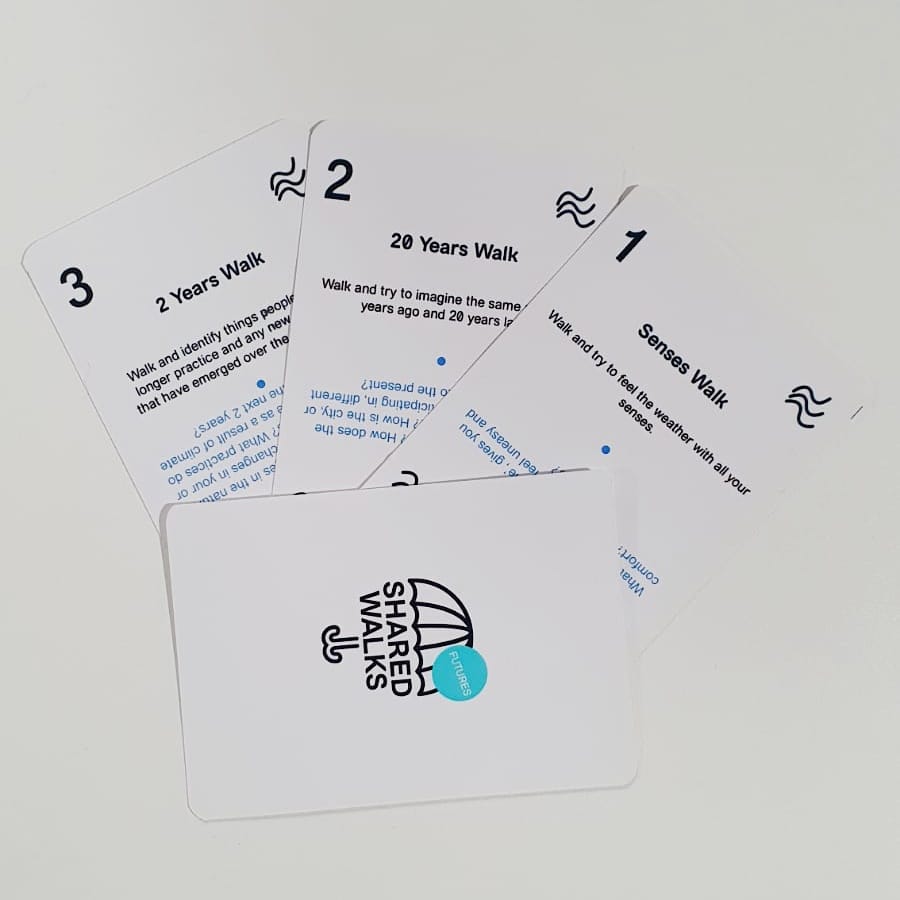
Aysem Mert, Jason Glynos, and Eylem Erturk have also developed a participatory method in preparation for Module 4: Future-making (2023 – 2024), led by Jason Glynos. Building on Eylem and Aysem’s earlier work Shared Walks / Climate Change Edition they created a card set that seeks to establish connections between time, space, and fantasies of nature under the rubric of Shared Walks/ Futures. It will be tested for the first time in Glasgow.
You can also follow our observations and updates on Twitter at @EPOC2025 and @ayshemm
29 – 30 September 2021
Online
Global Policy Institute Online Workshop: ‘Law and Governance in the Anthropocene’
Ayşem Mert presents together with Dr. Larissa Basso the paper “New forms of legality in the Anthropocene”.
22 September 2021
University of
Duisburg-Essen (online)
Future of World Orders, Centre for Global Cooperation Research
Ayşem Mert presents her co-authored work with Jelle Behagel “The political nature of fantasy and political fantasies of nature” published in Journal of Language and Politics, 20(1):79-94.
13 August 2021
Sigtuna, Sweden
ClimateExistence Conference
Ayşem Mert attended the ClimateExistence Conference and co-organized a Walkshop with artist and researcher Eylem Ertürk titled Shared Walks / Climate Change Edition.
The Shared Walks / Climate Change Edition prototype was tried out by participants of the Climate Existence Conference. Researchers, artists and experts dealing with different aspects of the climate crisis had the chance to experience the newly developed card set and gave feedback on the walks, themes and methodology. We discussed the traces found on the walking routes related to all the themes -weather, emotions, resilience, public spaces, politics, economy- each including three different and interrelated walking prompts.
Shared Walks / Climate Change Edition is developed by Eylem Ertürk in collaboration with Ayşem Mert. Based on participatory research, the card set is work-in-progress and will be launched in late 2021.


Walkshop: Shared Walks / Climate Change Edition
Eylem Ertürk, Ayşem Mert

Abstract
How can we walk with others as climate change makes life increasingly difficult? The emotional, as well as physical loss suffered due to climate change, can be overwhelming, and debilitating. Join the Shared Walks / Climate Change Edition (in the participatory research phase) and explore how embodied experience can turn into reflection and awareness, and how this can, in turn, enable agency and action.
Shared Walks is an initiative that opens a playful space for the exploration of the environment and others by walking. Based on this artistic/urban/participatory methodology, Shared Walks / Climate Change Edition was developed as an experimental contribution that aims to respond to the climate emergency, trace its influences and our experiences on the human psyche and the more-than-human environment by walking. Participants walk in pairs and collect and share observations, impressions, thoughts, feelings, memories, stories, associations etc.; mapping their surroundings from different perspectives. Shared Walks / Climate Change Edition consists of a set of cards with different walking prompts. They propose minor changes in the way we normally walk, to pave the way for an appropriation of places, connect with others and trigger self-awareness related to the themes: the traces of climate emergency in the places we live/work/walk, the emotions emerging from our experiences of climate change (such as anger, anxiety, grief, hopelessness), the actions these emotions can bring about (ranging from collecting and maintaining memories to solidarity and passionate political action). By walking in pairs around Sigtunastiftelsen, in accordance with the challenges and questions proposed by the card set, participants of the walkshop investigate the emotional and physical traces of climate change in their immediate environment, and explore the ways in which we can understand and act on climate change.
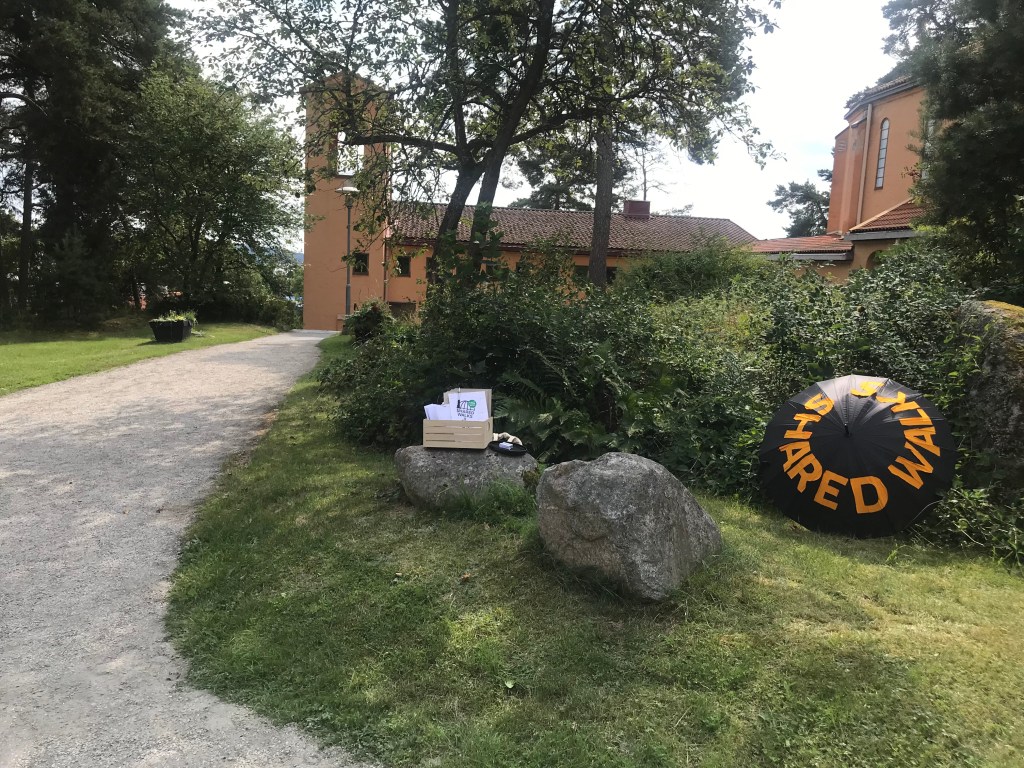


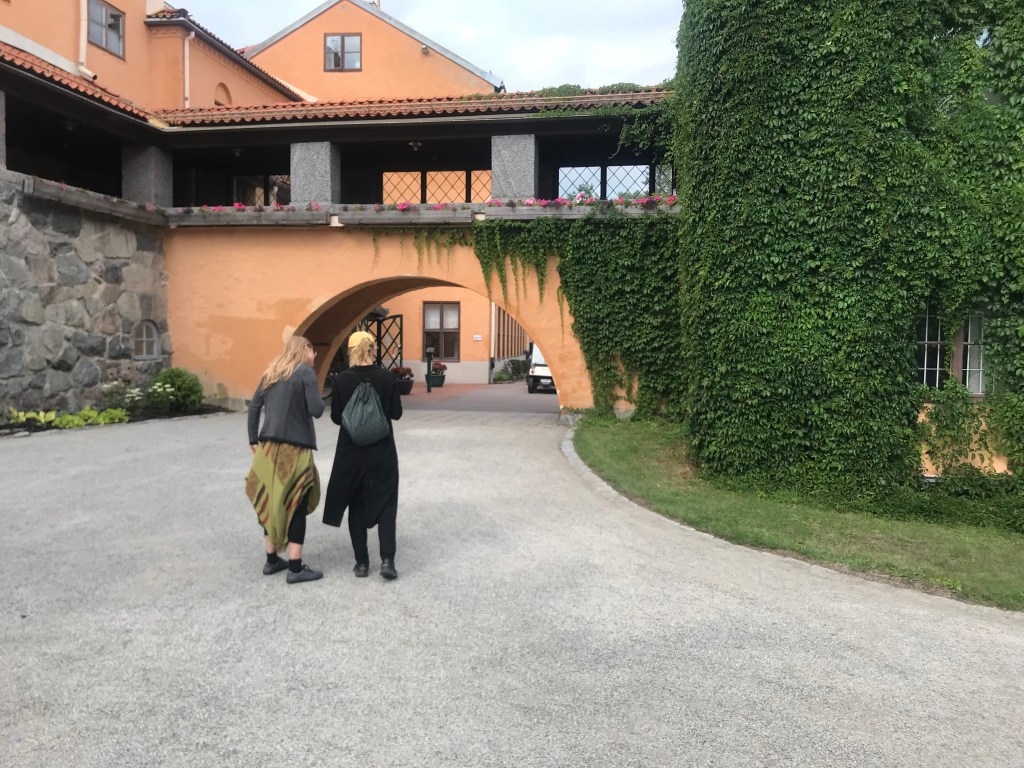
Photos by @eylemerturk
Logo design by @raphael_volkmer
03 – 06 August 2021
Stockholm, Sweden (online)
STREAMS Conference 2021
Ayşem Mert presented the EPOC2025 project and her co-authored paper with Jelle Behagel titled “The political nature of fantasy and political fantasies of nature” at the STREAMS Transformative Environmental Humanities Conference.

The political nature of fantasy and political fantasies of nature
Jelle Hendrik Behagel, Ayşem Mert
Abstract
Within post-structuralist discourse theory, there has been an ongoing interest in fantasy and the fantasmatic logic. We propose a new way forward and suggest a focus on fantasies of ‘nature’ and what is deemed ‘natural’. Fantasies are structurally entwined with language, desire, and political ontologies. Discourses of nature hold a privileged position in this entwinement. We use the psychoanalytic concept of fantasy to explore how symbolic engagement with the world is supported by fantasmatic mechanisms. We argue that political fantasies express political subjects and objects via the imaginary mechanisms of splitting and projection. In an era of ecological crises and global pandemics, we find that fantasies that create a split between nature and society are a central part of the transformation of political imaginaries and discourses. Studying fantasies of various “nature cultures” and the politics of nature is thus an important new direction for discourse theory to explore anti-essentialist ontologies.
30 – 03 July 2021
Athens, Grece (online)
EWIS 2021 Workshop
At the 8th European Workshops in International Studies, Ayşem Mert has co-organized a workshop with Dr. Katja Freistein (Centre for Global Cooperation Research, University of Duisburg-Essen) titled The role of fantasy in imagining futures: Post-COVID-19 subjectivities and transformation of naturecultures.
The workshop brought together scholars from different disciplines focusing on the role of fantasy in the imaginaries of future (posthuman) societies and subjectivities, particularly on the way we rethink naturecultures during (and possibly after) the global pandemic. Different fantasies of various naturecultures imagine different futures after the pandemic, effectively changing ontological stances, epistemological preferences, political imaginaries and social practices. More even, fantasies empower or disempower specific modes of action. Accordingly, the papers presented here explored how fantasies shape post-COVID-19 futures, i.e. identities and relations (individual, social, environmental, international, cross-species, more-than-human), practices and imaginaries, or which fantasies transform or create new political imaginaries, social practices, standards, and routines.
July 2021
Centre for Global
Cooperation Research (online)
Project Publication: “Critical Fantasy Studies Meets Global Cooperation Research: A New Research Agenda for Investigating Crisis Politics“
Published by the Centre for Global Cooperation Research, and written by Ayşem Mert this publication highlights links between crisis and political change, and the increasing relevance of the study of future imageries in connection to change and particularly with the Corona Virus Crisis.

30 June 2021
Athens, Greece (onlin)
EWIS 2021 Workshop
All researchers involved in the project were present at the project launch during the EWIS 2021 Workshop, where we also launched the project website. Jason Glynos and Elise Remling, presented the first framework paper the team started writing, titled “Get me out of here! Drawing psychoanalytic insights into our account of the crisis politics of COVID-19 and climate change”.
Get me out of here! A comparative psychoanalytic perspective on the crisis politics of covid-19 and climate change
Jason Glynos, Ayşem Mert, Jelle Behagel, Elise Remling
Abstract
In January 2020, the World Health Organization declared Covid-19 to be an International Public Health Emergency. Only a few months before, the European Parliament declared a ‘climate emergency’, the Oxford English Dictionary chose ‘climate emergency’ the word of 2019, and a Climate Emergency Resolution was brought to the US Congress and Senate. This paper develops a framework to explore the societal and political responses to these two emergencies. Using a psychoanalytic approach, the aim is to reveal some of the ways in which fantasies shape the prospects of establishing a global climate regime that matches the magnitude of the ecological crisis contemporary societies face.
The paper has a three-fold structure. First, it maps out some of the ways that psychoanalytically-informed studies have sought to problematize our responses to Covid-19. Second, awe compare and contrast these accounts with existing accounts that explore our responses to climate change, sometimes called climate anxiety or grief. This helps highlight some common problem domains and hypotheses that can inform a broad research agenda structured around more targeted research questions, case studies and data-sets. The purpose of this exercise is, in part, to draw attention to the way psychic factors dynamically shape our responses to crises, including their interrelation with other (material, economic, moral) factors. Third, we conduct a pilot study in discourse analysis on one of these targeted questions: What psychic factors can be identified in Covid-19 responses, and how does this compare (or interplay) with responses to the climate crises?
 Environmental Governance Post Coronavirus Crisis