Making Nature work again – Side notes on EPOC workshop 27-30 March 2023
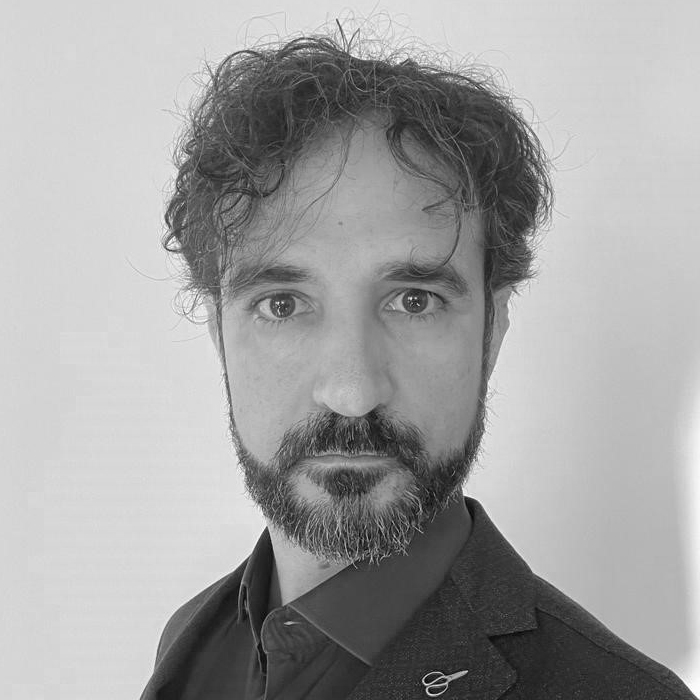
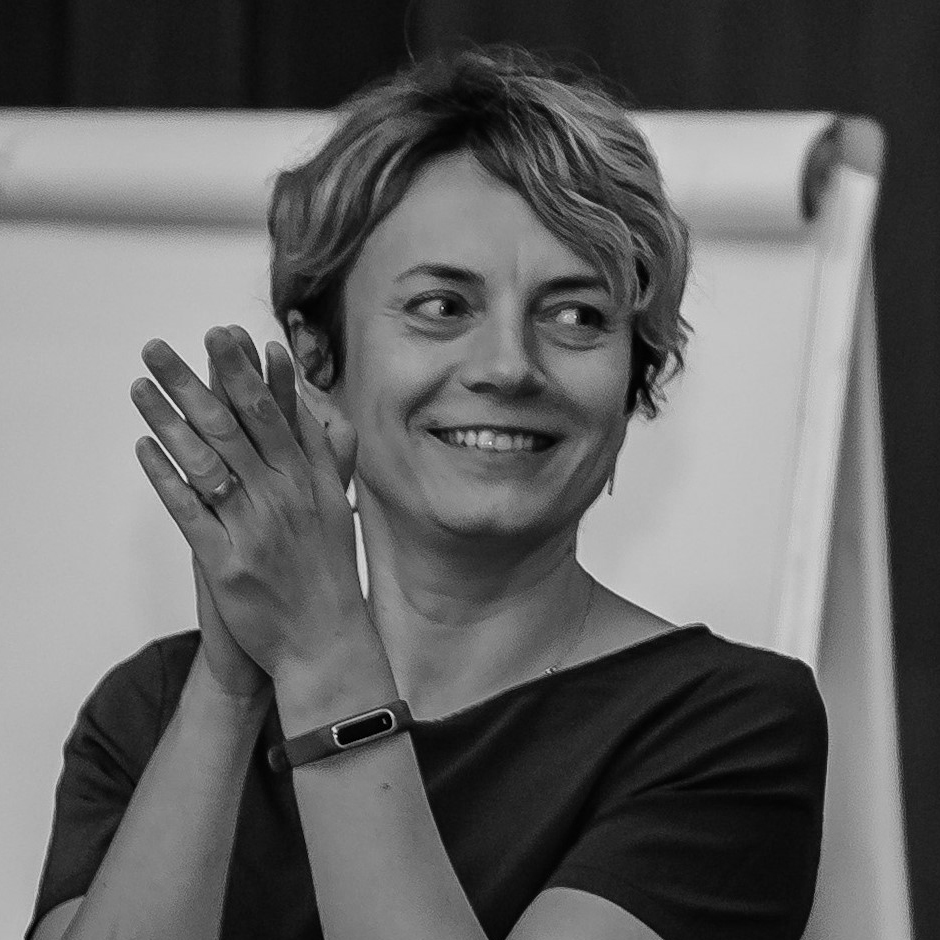
An Article by Emiliano Farinella and Lidiia Kasianchuk
August 2023
As we move beyond the COVID pandemic, we have the unique chance to look ahead to a post-pandemic world.
We walked through a three year long global crisis and we can look back now at it as an opportunity to change. Crisis, from Greek κρίσις, is telling us of the opportunity that we have to discern, to discriminate what was good from what we would like to change, what to leave behind, and what to bring with us. We can start our journey toward the future again, we can start questioning our possible futures, how are our imaginaries changing in the aftermath of the pandemic? How are our chronicles of the nearest future evolving? What will be the shape of global environmental politics in the next decades?
The EPOC research team and the members of the EPOC’s Societal Participants Assembly met in Amsterdam between 27th and 30th of March 2023 to explore the new fantasmatic orders that emerge and shape global environmental politics and governance in the post-coronavirus world.
The convened experts started their workshop by exploring three of the legacies that we have from the pandemic:
How global institutions responded to the pandemic, did the pandemic change their decision-making process?
How has the pandemic affected synergies and trade-offs between different global policies and societal values?
How will the pandemic influence the future pathway of Sustainable Development Goals (SDGs)? In 2015 United Nations adopted the SDG which represents a worldwide appeal to eradicate poverty, preserve the environment, and guarantee that all individuals achieve peace and affluence by 2030.
If we summarize in a single key question: did the pandemic reshape the response to the global climate and ecological crisis?
The answer is still open, but we can expect more insight at the conclusion of the EPOC project with the final deliverables.
Practices and behavior, how has the pandemic influenced those among the institutions and in daily life?
During the pandemic, we agreed all together to something unthinkable before. With few exceptions (Sweden as the clearest example) all the governments introduced significant restrictions on personal freedom, locking down entire municipalities or regions. An unprecedented experiment of restricted access where we, all together, decided to stay at home. This has been accompanied by extensive explanations to gain consensus in some countries, while in others prevailed a top-down enforcement.
This unprecedented social experiment leaves many unanswered questions: how behaviors and practices were affected, both at a personal and institutional level, how narratives of our own freedom changed, and how perspectives on accessibility to public spaces have been affected by three years of limitations.
What emerged is the need for meaningful participation where access, inclusion, and participation are an inextricable triade.
What changed in the vision of sustainability?
Staying at home we learned the power of local and how the global world can be fragile. We were forced to rethink our way of life and given the opportunity to rethink the concept and the need to move towards a local degrowth, rebalance our personal and professional life, and even assess the burden of commuting, considered a given till that moment.
We learned the devastating impact of unconsidered extractions of resources from the environment, which suddenly can become a source of health threats.
The pandemic made clear, from an unexpected perspective, that when Nature does not work anymore, the whole of humankind is at risk.
With a such high stake any environmental governance post-corona must rethink the trade-offs that we are willing to accept. We already experienced the magnitude of the change when in December 2022, at the United Nations Biodiversity Conference (COP15), 188 countries adopted the Kunming-Montreal Global Biodiversity Framework, a package of measures that establishes specific objectives and aims for stopping and reversing biodiversity decline. Known as 30 by 30, one of the goals is to guarantee that by 2030, a minimum of 30% of the globe’s terrestrial, inland water, coastal, and marine areas are safeguarded and effectively restored.
The 30 by 30 global initiative has an environmental component, which protects biodiversity hotspots from human influence, a social component, regulating a separation between human society and nature and allowing only managed incursions, and finally, an economic component that allows society outside to continue to develop.
At the conclusion of this long crisis, we found a new mindset: being in harmony with Nature is possible.
It is possible at the environmental level, because developed societies and nature can co-exist, it is possible at social level and it is, and must be, economically sustainable.
What did COVID reveal to us?
We have been learning countless experiences from the pandemic, but the most important lesson is that change is possible.
Just to give some examples, we learned the invaluable power of genomic sequencing and the value of Digital Sequence information (DSI) governing the data derived from de-materialized genetic resources.
We experienced how shared narratives can influence policy-making, when collective emotions reach the point to set the political agenda. We saw how freedom is fragile and how easily we could accept policies of strict control, trading our freedom for safety.
The global infrastructures were challenged and we learned to live a bit more locally. Our crisis plan went through a stress test and the global institutions reacted by creating even more robust preparedness plans. In this context, the European Commission in 2021 launched the Health Emergency Preparedness and Response (HERA) department with the mission to prevent, detect, and rapidly respond to health emergencies.
Suddenly the world had to switch to a remote-working setting, this was as well a stress test for the global digital infrastructure elevating the interoperability among different systems as one of the most important features of any system.
The pandemic made visible also the widespread inequality. We saw the effects of inequality from a macro perspective in the dynamic of the diffusion of vaccines worldwide, and we saw it in our micro-world where a difference in wealth can make life in lockdown a nightmare or a luxury retire.
Facing our fears
In these three years many of us experienced personal losses and the experience of mass losses contributed to creating a common resilience to an unprecedented challenge.
Adversing learned helplessness we reframed our communication from a threatening style to an emotional language to make people feel resilient. We have learned a new skill, we have learned the importance of hope and to trust that we can succeed altogether. This was first a natural reaction from public clapping and singing on the balconies and then became a public communication strategy shifting from the tone of a war bulletin to more hopeful ´marathon´ narratives.
Scenarios for the future between Utopia and Dystopia
One of the key points in our fight against COVID was to protect vulnerable people. But when we protected them, we attacked their well-being. We saw the neo-colonial powers establishing new narratives (e.g. the Moderna vs Sputnik vaccines narrative by Russia). We experienced unexpected compliance to hyper-strict regulations, the case of Italy’s first lockdown, and its strict compliance first of all.
This stress test to our democracies opens the stage to imagine uncountable future scenarios spanning from a utopic world where we learn to co-exist with nature in a path of development and degrowth, to dystopic scenarios where a fragmented society is composed almost exclusively of people that are excluded by any participation, becoming influential for the political agenda and ready to trade freedom for security.
The major challenge that we will face is to move in the spectrum of Democracy in a direction far from an empty democracy, where we can recover meaningful participation in our collective life and influence the political agenda.
We can aim for a Nature that is working again.
Good readings
During the workshop, many books were mentioned by participants. We selected three among them:
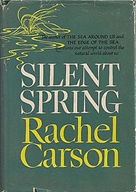
Silent Spring is a groundbreaking environmental science book by Rachel Carson published in 1962. After 60 years Carson’s message is still loud and clear and even more alarming is her call to awareness of the harmful effects of pesticides on the environment and the dangers they pose to wildlife, humans, and the ecosystem as a whole. Carson’s work helped to spark the modern environmental movement and it deserves to be read again while we still have the margin to avoid a silent spring.
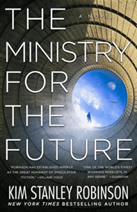
Would it be possible to mitigate the effect of climate changes acting on a planetary level? This is the founding question of The Ministry for the Future, a science fiction novel by Kim StanleyRobinson who follows in his story the head of a new United Nations agency, as she works to implement solutions to the crisis, including geoengineering and a new economic system. Kim Stanley Robinson presents a hopeful and thought-provoking vision of how humanity might confront the challenges of a rapidly changing planet.
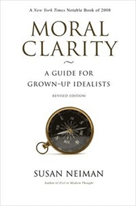
Is moral clarity necessary to live a meaningful life and to make moral progress in the world? Susan Neiman in her “Moral Clarity: A Guide for Grown-Up Idealists” explores the concept of moral clarity and its importance in our lives. She examines the challenges we face in achieving moral clarity in a complex and often contradictory world and offers practical guidance for cultivating it. Neiman draws on a range of philosophical traditions and historical examples to make her case.
Role of political fantasies during Biodiversity Summit
An article about the work of Jelle Behagel at the UN Biodiveristy COP 15 Australian “The Mirage” media portal
Can democratic practices foster sustainability transformations?
A summary of the webinar “Democratising Sustainability Transformations” by Julia Feine, Melani Gunathilaka, Rafael Jimenez Aybar, Ayşem Mert, Jonathan Pickering and Julia Tschersich Earth System Governance research network website


 Environmental Governance Post Coronavirus Crisis